
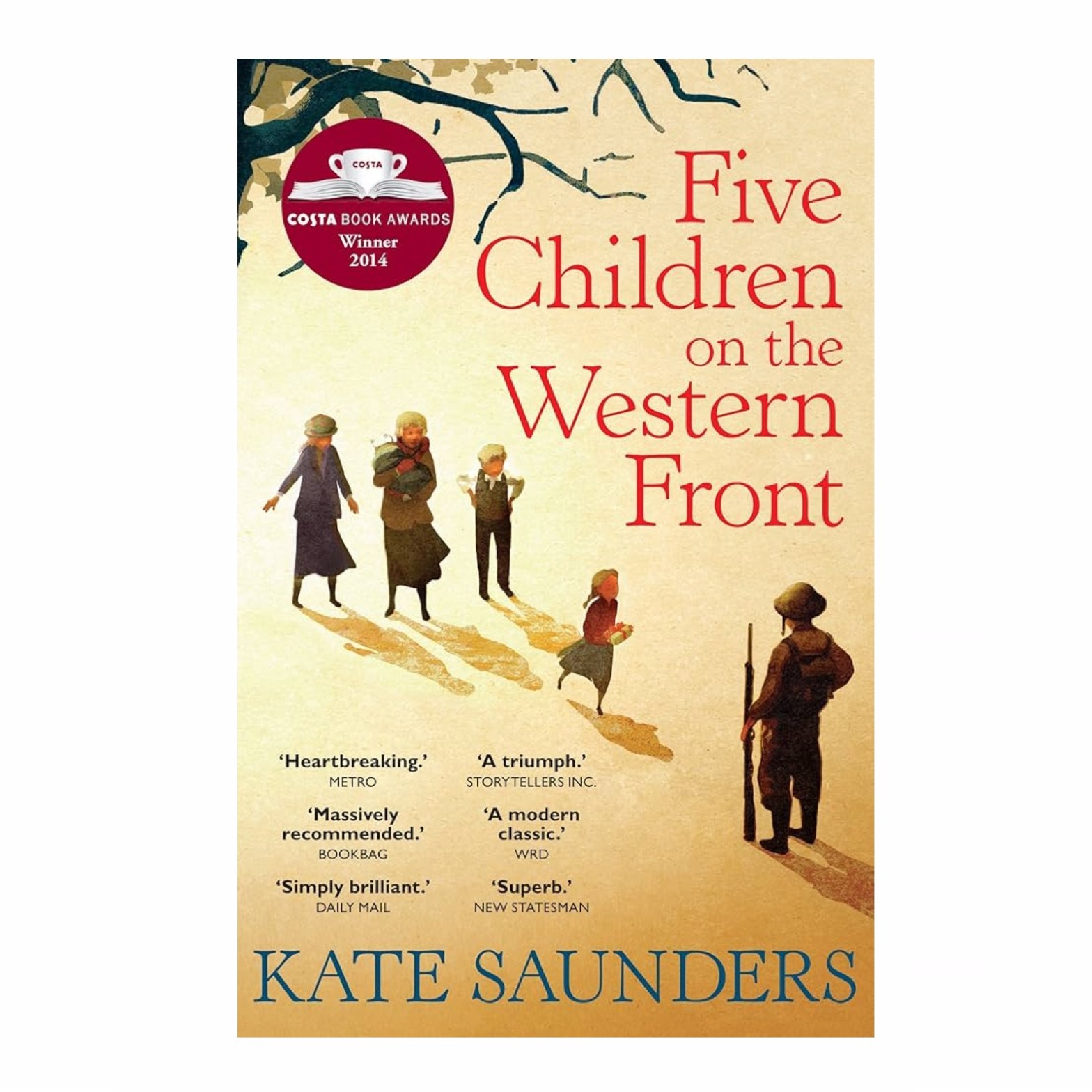
I remembered watching Five Children and It when I was younger, so when I spotted the book in a charity shop, I bought it. To be honest, Five Children and It felt a bit dull to me, though the kids enjoyed it—especially when I put on a deep rasping voice for the Psammead. They seemed to find those magical stories more enjoyable, although they didn’t ask me to read more. But since they’d let me read nearly to the end, I was intrigued when I saw Five Children on the Western Front, so I bought that cheaply too.
My kids had previously shown a slight interest in war books, so I thought this continuation might be an engaging way to spend some evenings with bedtime stories and perhaps deepen their understanding and interest in wartime history. How wrong I was!
Kate Saunders Five Children on the Western Front Synopsis
Five Children on the Western Front is very well written. The story touches on serious topics—one of the ‘Five’ having lost part of their face and eyesight from fighting in the war, tragic stories of other characters, and even references to death. Despite the gravity, the Psammead’s rasping voice returns regularly, bringing the children into softer tales of love, many reminiscent of Romeo and Juliet.
What surprised me was how endearing these short love stories were; the funny Psammead adds warmth and joy to the narrative. The Five children are now six, but their bond remains strong, supported by this magical element that lightens the weight of the hardship surrounding them. My kids kept asking for “one more page,” and it even stopped their usual arguing in the car as they listened intently.
Unlike the earlier Five Children and It, this sequel grapples with complex emotions tied to war, loss, and hope, yet it manages to maintain a sense of adventure and comfort. It sparked more thoughtful conversations between us about the realities of the Western Front and the resilience of those involved, making it both an educational and emotionally engaging read.
Reminder of Allowing Our Kids to Follow Their Own Dreams and Be Themselves
There’s a powerful theme highlighted from Five Children on the Western Front. The young adults’ hesitation to share who they love because of fear of rejection from their parents resonates deeply with the values of gentle parenting. It beautifully illustrates how important it is for parents to cultivate an environment of unconditional acceptance and emotional safety.
When children feel fully embraced in their feelings and choices—especially around love and relationships—they’re more likely to open up and build trust, knowing they will be loved regardless of the outcomes or challenges they face. This acceptance helps nurture their confidence and emotional resilience, enabling them to navigate life’s complexities with the assurance of parental support.
Possible Themes To Consider Before Reading To Kids
Before sharing Kate Saunders’ Five Children On The Western Front with young readers, it’s helpful to be aware of the themes woven throughout the story. This story is recommended for ages 9 and up, as some themes may be too challenging for younger children. I read this to my children when they were nearly 7 years old and 8 years old. While this book is beautifully written, it does explore some tragic and more complex topics. Here are a few themes to keep in mind:
This book does not shy away from portraying the physical and emotional toll of war, nor the tragedies it can bring. When I bought it at the charity shop, I hadn’t checked the age recommendation beforehand. Despite some intense and challenging sections, my children were completely enthralled by the story. I think it was probably harder for me to read, especially with the constant news suggesting the possibility of a third world war. As a parent, it was alarming to confront these depictions of war’s harsh realities, knowing that such suffering could potentially affect us all in the near future.
However, the book also offers gentle, hopeful messages—for example, when a character who had been badly injured expresses gratitude simply for having survived, or when the Psammead wishes that humans would never wage war again. I imagine the children saw these intense scenes as fictional adventures, while I found myself reflecting on them as a sobering reminder of what might be to come.
Why I Liked Reading This To My Children
Overall, Five Children on the Western Front surpassed my expectations. It provided narrative depth, a mix of sorrow and joy, and kept the children captivated. If you have young readers interested in historical fiction with a magical twist, this book is well worth picking up.
I wouldn’t admit this in public, but reading this felt like I was being a better parent—partly because it was impossible not to put on a funny Psammead voice. I still feel a warm glow remembering my Dad’s silly voices when he read to me as a child, yet I usually struggle to do such voices myself. So, in a way, this book helped me make progress I hadn’t expected, and hopefully, it brought some joyful, memorable moments to my own children as well.
Why My Children Loved Five Children On The Western Front
There are a few special reasons why this book truly captured my children’s hearts. First and foremost, they were completely enchanted by the magical presence of the Psammead. His whimsical and raspy voice brought the story alive in a way that felt playful and comforting, even amidst the more serious themes woven throughout. Acting out his character with a deep, scratchy rasp made the reading experience fun and memorable, and the children eagerly looked forward to hearing his familiar voice as part of each chapter.
Beyond the charm of the Psammead, my children have shown a growing interest in stories about wars and wartime heroes, and Five Children On The Western Front offered them a unique—and surprisingly tender—window into that world. Unlike many war stories that focus solely on battles and strategy, this book intertwined the harsh realities of the Western Front with personal struggles, emotions, and relationships. It allowed them to connect with the characters on a human level and understand the courage and sacrifices involved in a way that felt accessible and appropriate for their age.
The blend of magical elements with real historical context gave them a fresh perspective that sparked their curiosity. Hearing about the challenges faced by the characters, including wounds, loss, and even love during wartime, helped my children develop empathy and a deeper appreciation for the experiences of people who lived through war. At the same time, the story never felt too heavy or overwhelming, thanks to the comforting presence of the Psammead and the uplifting moments sprinkled throughout.
In essence, the book brought together imagination and history in a way that balanced wonder, education, and emotional resonance. This balance kept my children engaged and coming back for more, asking for “one more page” even when bedtime was long past. It wasn’t just a story for them—it became a shared adventure that helped us talk about important themes like bravery, friendship, and love in difficult times. That combination of magic and reality made Five Children On The Western Front a standout read they truly loved.
Final Thoughts
Reflecting on our journey through Five Children on the Western Front, I am struck by how much this book became more than just a bedtime story for my children and me. What began as a simple purchase from a charity shop evolved into a meaningful exploration of history, love, and family bonds amidst the shadow of war.
Reading this book together offered us a unique opportunity to engage with complex themes in a way that was accessible and heartfelt for young readers. The blend of magical whimsy from the Psammead with the real emotional weight of wartime experiences created a powerful balance that kept my children captivated while gently opening the door to conversations about courage, loss, and hope.
What I treasure most is how the story reminded us about the importance of unconditional love and acceptance—whether it was dealing with wounds both visible and invisible, or the vulnerability of love kept secret out of fear. These are lessons that resonate far beyond the pages, echoing in our family’s own values around trust and gentle parenting.
Ultimately, Five Children on the Western Front is a beautiful reminder that even in the darkest times, joy, resilience, and connection can shine through. This book sparked meaningful dialogue, created cherished memories, and deepened our understanding of a difficult chapter in history while celebrating the enduring power of love and family.
Have you shared Five Children on the Western Front with your family? I’d love to hear how it impacted you—please share your thoughts and experiences in the comments below!
 Gentle Parent